

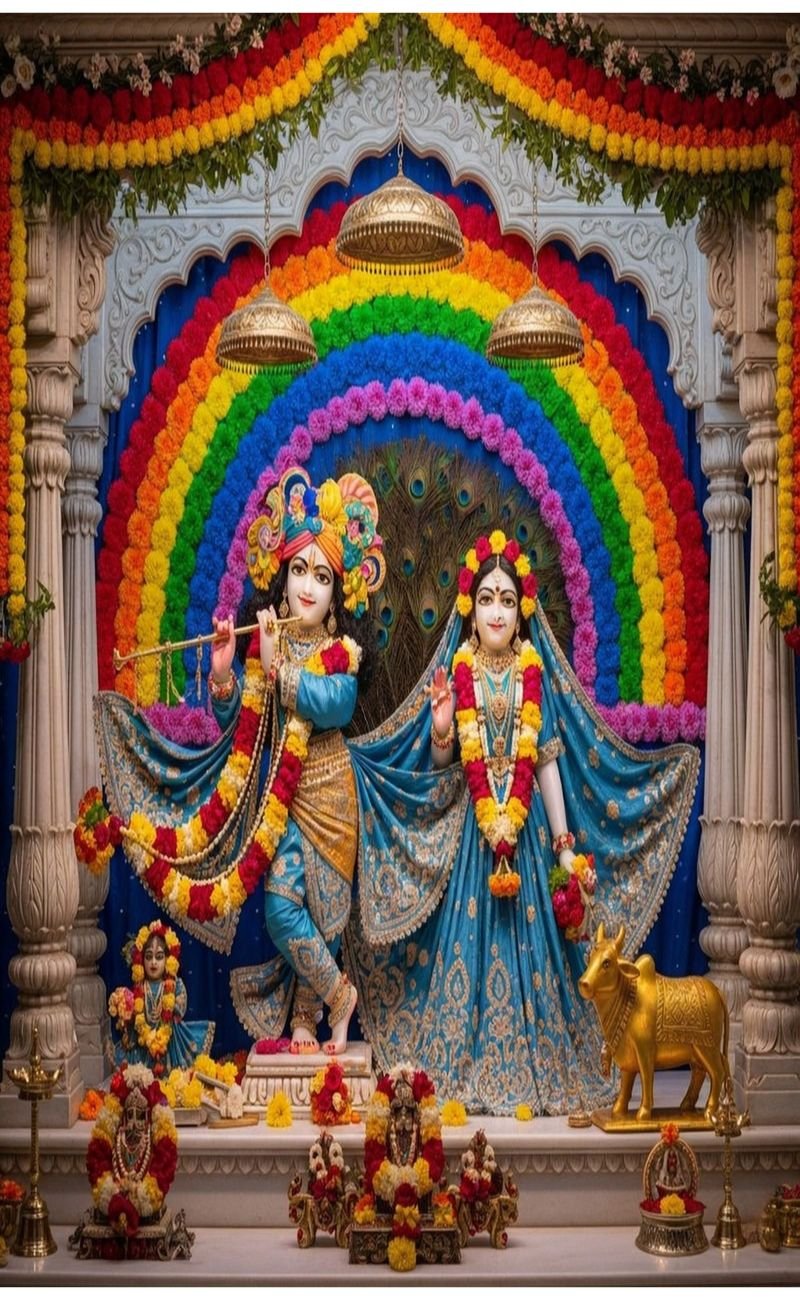
The holy place, Vrindavan, where a child Lord Krishna grew up, is a journey, not a place, but a trip full of wonderful divinity, civilization, and ancient myths. Vrindavan has hundreds of temples, each with its own history and specific rituals. Vrindavan is the place where millions of Indian pilgrims and visitors of different nations come annually.
It does not matter whether you are on a day visit, weekend pilgrimage, or longer spiritual vacation; it is important to plan your darshan (visit) inside the temple to savor the spiritual breath of Vrindavan. Traditional mangal aarti (early mornings), bhog aarti, and shayan aarti timings are observed in many of the temples in this area. Not knowing them correspondingly is the soul of the Vrindavan experience one can miss.
We present to you the final list of Vrindavan temple darshan timing in this guide to allow easy planning of your visit.
Vrindavan temples are unlike typical city temples. They follow very specific darshan windows, based on ancient Vaishnav traditions. Most temples do not allow entry throughout the day. Instead, they open and close multiple times, especially around the daily seva (services) offered to the deity — such as waking up the Lord, offering food, rest, and sleep.
That’s why it’s essential to know:
Let’s explore the darshan timings of the most famous temples in Vrindavan.
Banke Bihari Temple is the most visited temple in Vrindavan. The unique aspect of this temple is that darshan is not continuous — the curtain is drawn every few seconds to prevent devotees from being overwhelmed by the Lord’s beauty.
Summer (April to October):
Winter (November to March):
Special Notes:
Built by the International Society for Krishna Consciousness, this temple is one of the cleanest, most organized, and well-maintained in Vrindavan.
Special Notes:
Constructed by Jagadguru Kripaluji Maharaj, Prem Mandir is an architectural marvel carved in Italian marble. Known for its grandeur and evening light shows, this temple draws tourists and pilgrims alike.
Special Notes:
This is one of the most sacred temples of Vrindavan, founded by Gopala Bhatta Goswami. The deity is said to have manifested from a shaligram shila (sacred stone) and has been worshipped in its original form since the 16th century.
Special Notes:
Nidhivan is believed to be the site where Lord Krishna still performs Raas Leela with Radha and the Gopis every night. No one is allowed to remain here after dark.
Special Notes:
This temple emphasizes devotion to Radharani, and the deity of Krishna is present, but Radharani is represented by a crown placed beside Him — a beautiful symbol of divine feminine energy.
Special Notes:
A historic temple said to be built at the spot where Lord Krishna killed the demon Keshi. It is one of the oldest temples in Vrindavan.
Special Notes:
To help you make the most of your visit, here's a sample one-day darshan itinerary covering top temples:
| Time | Activity |
| 4:00 AM | Reach ISKCON for Mangal Aarti |
| 6:00 AM – 7:30 AM | Freshen up, light breakfast |
| 8:00 AM | Visit Radha Raman Temple |
| 9:30 AM | Banke Bihari Darshan |
| 11:00 AM | Radha Vallabh Temple |
| 12:30 PM | Lunch break / Prasad at ISKCON or local dhaba |
| 2:00 PM | Visit Nidhivan (before closing) |
| 4:30 PM | Prem Mandir and light show |
| 6:30 PM | ISKCON Evening Aarti |
| 7:30 PM onwards | Yamuna Aarti at Keshi Ghat |
Vrindavan is not just a town of temples — it’s a living, breathing embodiment of Bhakti (devotion). Whether you are an early riser eager for Mangala Aarti, or an evening visitor drawn to Shayan Aarti and the glowing Prem Mandir, planning your visit according to temple darshan timings ensures that you experience Vrindavan at its most spiritual moments.Let MathuraHub be your guide in making the most of your Braj Yatra — from darshan timings to transport, tours, and trusted local information, we’re here to help you connect with the divine, peacefully and purposefully.